How Shared Breaks Changed from Household Meals to Work Pauses
Explore how shared breaks changed from household meals to work pauses, and learn how to create a welcoming moment of connection around your real schedules.
The most common mistake in thinking about shared breaks is to treat the family meal and the workplace pause as stages in one neat historical progression. They are different arrangements, shaped by different schedules and responsibilities. A household meal depends on who can prepare food and gather; a work pause depends on whether people can step away from their tasks.
There is no single history that fits every place or period. A more careful account looks at specific settings: household meals organised around domestic routines, factory breaks governed by workplace rules, and the varied pauses found in offices and other workplaces. These examples show how the meaning of a shared break shifts when the people, duties and rules around it change.
Meals at home
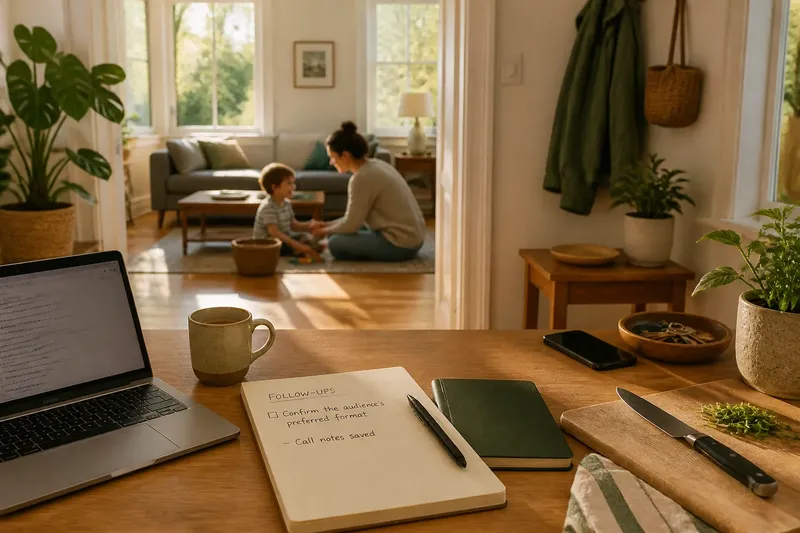
Household meals have been organised in many ways. In an agricultural household, the timing of a meal might follow the day’s work and the availability of food; in a household shaped by paid shifts, family members might eat at different times. These are illustrative contrasts, not a universal timeline. Customs also vary with local food traditions, religious observance, resources and who is responsible for cooking and care.
Eating together can give conversation a natural starting point: someone passes a dish, asks about the day or listens while others talk. But a shared table does not automatically mean shared work. If one person cooks and clears while others simply arrive, the meal can add to that person’s burden. A gathering is more welcoming when its practical labour and its timing are considered, rather than assumed to fall to one person.
Factory break rules
In factory settings, workplace rules could shape when workers paused and whether they stopped together or in turns. The details differed by workplace and period; there is no single factory-break model to stand in for all industrial history. A bell or supervisor might mark an interval in one setting, while the need to keep a process running could require workers to rotate through their breaks in another.
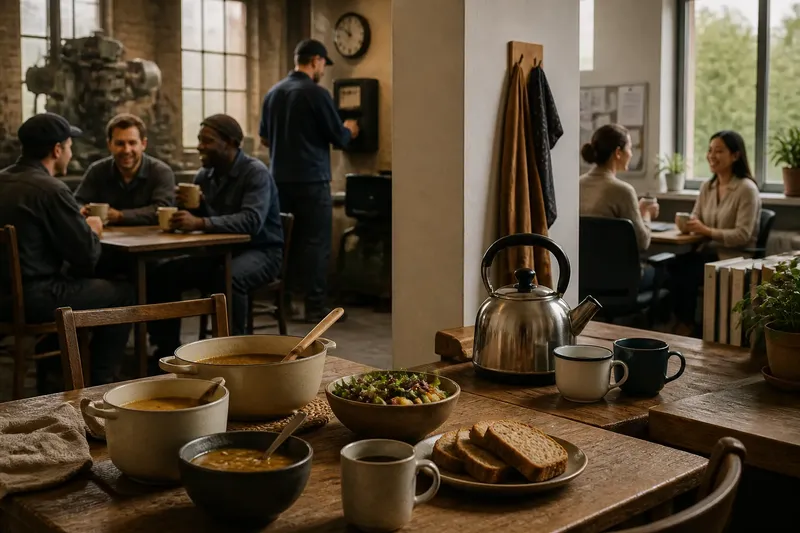
This is a different kind of shared time from a household meal. The break is connected to work organisation, not just to when food is ready or family members are available. Colleagues might meet over a meal or a hot drink, but the timetable could be set by the job. The distinction matters: a pause that exists on a schedule may still be difficult to use if duties, space or workplace expectations get in the way.
Office tea breaks
In some office settings, tea or coffee breaks became a familiar way for colleagues to pause and talk. A staff room, a kettle or a nearby café could provide a place to gather, while individual work patterns and workplace norms affected who could join. This describes a recognisable arrangement, not a universal custom shared by every office or worker.
Office pauses also show how a break can be social without being a full meal. A brief conversation beside the kettle may offer contact beyond the immediate task. Yet an invitation can feel hollow if people are expected to keep working at their desks, or if leaving a task is not practical. The useful question is not only whether a break is scheduled, but whether people can actually take it.
What shapes a shared break?
Did factory workers all take breaks together?
No single pattern applied across factories. Some workplaces could pause groups together, while others needed workers to take turns so duties continued.
Why did office tea breaks become social?
A shared kettle or staff room gave colleagues a place to meet beyond their immediate work. How often people used it depended on schedules, workload and local workplace customs.
Is a shared break always a meal?
No. A household meal is one form, while a cup of tea or a brief conversation can also mark a pause. Food may bring people together, but it need not be a condition of joining.
What if colleagues have different schedules?
Look for an overlap that is genuinely available rather than expecting everyone to stop at once. If there is no shared window, an open invitation at different times may be more realistic than a single group break.
Planning a pause
To make a shared pause work in a particular group, start with observable constraints rather than an ideal timetable. For each point below, note what is true, then use the stated decision to choose an arrangement or an alternative.
- Check whether people have overlapping free time; if they do, choose a shared interval, but if they do not, try smaller or rotating groups.
- Check whether everyone can leave their duties at once; if they can, invite the whole group, but if coverage is needed, arrange turns.
- Check whether there is a comfortable shared space; if there is, use it, but if it is noisy or crowded, choose another room or meet outdoors where practical.
- Check whether food is welcome and accessible to the group; if it is, make food optional, but if it complicates joining, keep the pause centred on conversation or a drink.
- Check whether people can decline without explanation; if they can, keep the invitation open, but if attendance feels pressured, make opting out explicit and ordinary.
- Check whether interruptions repeatedly cut the pause short; if they do, clarify when participants are available, but if interruptions cannot be avoided, use a shorter or less formal gathering.
Say a small team has staggered shifts, one shared kitchen table and several colleagues who prefer not to eat at a fixed hour. The team first checks the rota and sees that some, but not all, colleagues overlap before the afternoon tasks begin. They then agree to leave the table available for an informal tea pause during that window, make bringing food optional and let people join or leave without explanation. The observable result is whether people can greet one another without blocking the table or delaying duties. If the shared window excludes a colleague, the team can add a separate invitation at that person’s available time rather than pretending one gathering suits everyone.
Shared breaks today
Shared breaks have not followed one straight path from the household table to the workplace kettle. Household routines, factory rules and office customs are distinct examples of how daily responsibilities can shape a pause. Their histories vary, and a broad comparison should not erase those differences.
For anyone arranging a shared break now, the history of shared breaks offers a useful prompt: notice who sets the time, who carries the practical work and who can take part without pressure. A pause becomes a real point of connection when the arrangement fits the people present, not when it imitates a supposedly universal tradition.