A Late-Autumn Supper with No Recipe to Follow
Make a late-autumn supper without a recipe by pairing one comforting centre with a simple accompaniment, using familiar ingredients and an easy cooking order.
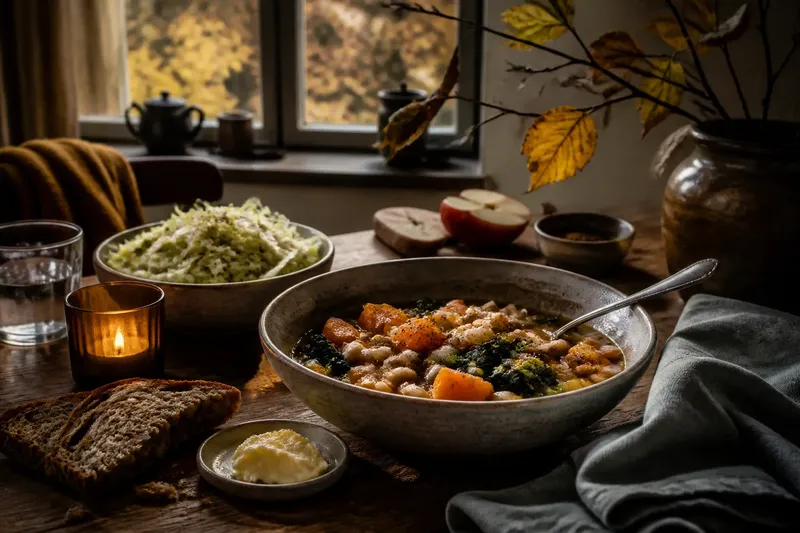
The common mistake with a late-autumn supper without a recipe is waiting for a complete plan before you start. That can turn a comforting meal into another task, while the ingredients you already have sit unused. Begin with one warm centre, add something simple beside it, and let the available food shape the rest.
Think of the meal like a few useful objects on a table: each has a purpose, but they need not match. Choose the main element first, then consider what would make it more satisfying in flavour, texture or substance.
Choose a comforting centre
Ask what kind of warmth sounds appealing. It might be soup, roasted vegetables, soft beans, or a baked potato with a savoury topping. The centre need not be elaborate; it simply needs to suit your appetite and the evening you have.
Look in the fridge, cupboard or freezer. A tin of butter beans, leftover cooked rice, carrots, eggs, bread or a piece of squash can suggest a direction. Notice anything that needs using soon, then pick one ingredient or dish to start with.
- A bowl: soup, stew, soft beans or grains served warm.
- A tray: vegetables roasted together, with bread or yoghurt alongside.
- A plate: a baked potato, omelette or toast with a savoury topping.
If the centre is already cooked, warm it gently and move on. If it needs more attention, keep the rest of the meal simple. Warmed lentils with a little stock, onion and black pepper, for instance, need not become a full stew.
Use autumn flavours
Root vegetables, brassicas, apples and sturdy greens may be to hand, but seasonal eating does not require a special shopping list. A cabbage in the fridge, frozen peas or a jar of pickled beetroot can bring colour and texture.
Choose flavours that work together rather than trying to include every autumn ingredient. Sweet carrots or parsnips sit comfortably beside earthy lentils or beans. Cabbage can soften in a pan with potatoes, while a sharp apple or a spoonful of mustard can brighten a rich dish.
Taste as you cook. If the food seems flat, try a little salt, black pepper, lemon or vinegar, adding gradually. If it tastes too sharp, butter, yoghurt or a mild starch may soften the edge. Follow the product label and relevant local guidance for cooking, storing and reheating food.
Add one easy accompaniment
An accompaniment should support the centre, not compete with it. Choose a contrasting texture, temperature or flavour, then stop if the meal feels complete.
- Check the centre’s texture: if it is soft, add toast or crisp leaves; if it is already crisp, choose a soft topping such as yoghurt.
- Check its flavour: if it is rich, add a pickle or sliced apple; if it is sharp, choose plain bread or potatoes instead.
- Check its substance: if it feels light for your appetite, add cooked grains or beans; if it already includes filling ingredients, leave out the extra side.
- Check what is ready to eat: if bread, cheese or jarred olives are available, serve one; if not, use a fresh or frozen ingredient you already have.
- Check the time and attention you have: if you want to keep cooking simple, choose a ready-to-serve accompaniment; if you have more room, prepare a quick salad or warm a roll.
- Check any leftovers: if they have been stored and reheated according to food-safety guidance, use them; if you are unsure they are safe, choose another ingredient.
Say you have a few potatoes, a tin of white beans and half a cabbage. You could warm the potatoes, heat the beans with a little stock and black pepper, then soften the cabbage in a pan. Add yoghurt or mustard at the table if you want a contrasting flavour. The resulting meal uses familiar ingredients without requiring all of them to go into one dish.
Arrange the cooking order
Start with the item that needs the most attention, then prepare the accompaniment while it cooks. For a tray of vegetables, cut and season them before putting them in the oven; while they roast, slice an apple or make toast. For soup, warm it while you gather bowls and spoons. Avoid starting a second cooking project just because the first is under way.
Adjust as you go: add water or stock if a pot becomes thicker than you like, or lower the heat if it bubbles too hard. Follow directions suited to the food and equipment you are using.
Imagine you come home tired with leftover rice, frozen peas and an egg. Put the rice and peas in a pan to warm, adding a little water if they need it; cook the egg separately in a way you enjoy, then serve it on top with soy sauce or chilli crisp if available. The result is a simple warm bowl, with no extra side dish to prepare.
Late-autumn supper without a recipe?
What if the fridge looks nearly empty?
Check the cupboard or freezer for beans, tinned tomatoes, pasta, oats, stock or frozen vegetables. Pair one with bread, a condiment or a small fresh ingredient if available, rather than trying to recreate a more elaborate meal.
How can I make supper satisfying?
Choose a centre that feels substantial to you, such as potatoes, beans, eggs, grains or bread, then add a flavour or texture you enjoy. Appetite and dietary needs differ, so let your own needs guide the combination.
Can I use leftovers?
Yes, if they have been stored and reheated according to food-safety guidance. Warm only what you plan to eat, and add a fresh or crisp element if the leftovers feel soft or heavy.
What if I do not want to cook?
Assemble ready-to-eat foods: bread with cheese or beans, soup with toast, or a baked potato with a prepared topping. Serving food can be enough; supper need not involve a cooking project.
Settle in to eat
Unhurried does not mean turning supper into a ceremony. Bring the food to the table, sit down before clearing up or answering messages, and pay attention to what is in front of you. A plate, bowl or tea towel can be all the setting the meal needs.
If you are eating alone, put your bowl somewhere comfortable and set your phone aside if that suits you. If someone is joining you, offer a choice of toppings or ask them to bring the bread. These small arrangements make room for company without adding much work.
If the food is ready before you are, keep it warm safely and follow relevant food-safety directions. If someone is late, toast bread later or add greens at the table rather than trying to keep every part at its best at once.
Leave the kitchen simply
When you finish, put away what you want to keep and leave the rest of the kitchen alone if you need to. A covered container or a note about an ingredient left over can make it easier to pick up the thread next time, without turning supper into a household project.
A late-autumn supper without a recipe can be as straightforward as soup with toast or warm beans beside potatoes. Keep a few familiar combinations in mind, and you will have a useful starting point even when the fridge looks different next time.